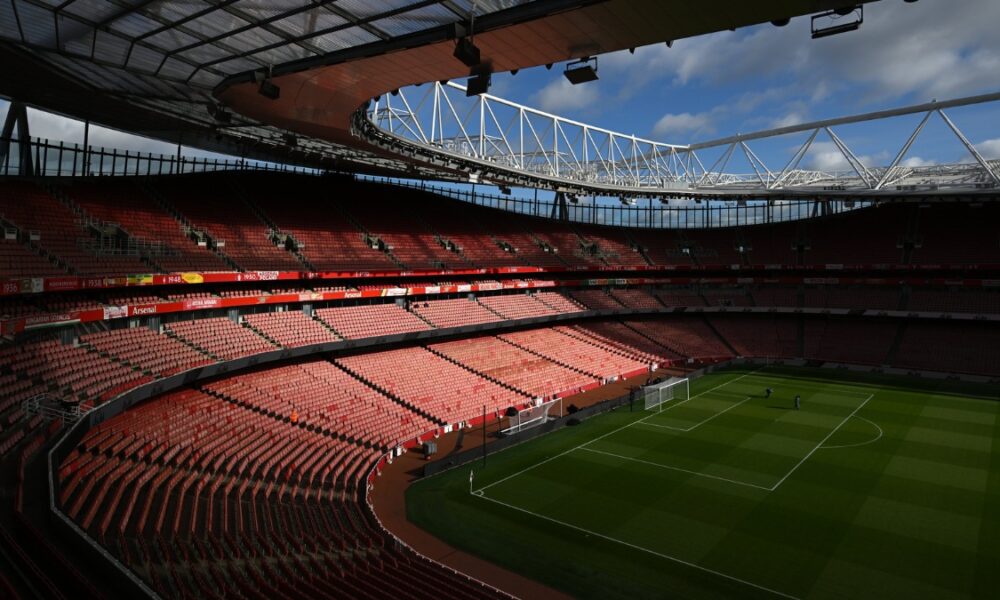
Arsenal are close. Very close. Close enough to almost smell a final — but Oliver Glasner stands in the way.
One good night. One clean performance. One more job done properly.
Standing in their way is Crystal Palace, now shaped by the ideas of Oliver Glasner. Organised, stubborn, and far more dangerous than the table suggests.
For the Gunners, this isn’t about flair anymore. It’s about teamwork. Control. And what Mikel Arteta’s critics like to call “job-sharers” — players who split roles, split space, and split responsibility.
The question is simple.
Can Arsenal share the work and still finish the job?
What ‘Job-Sharers’ Really Means at Arsenal
This Arsenal side doesn’t rely on one hero.
It’s not about one star carrying the team, it’s everyone pulling together.
Instead, roles overlap.
Wingers drop inside, midfielders push on, full-backs become playmakers.
It’s controlled chaos, and when it works, Arsenal suffocate teams.
The upside is clear.
Opponents don’t know who to track.
Pressing lines get stretched.
Passing lanes open up.
The risk?
If timing is off, the whole thing can look… busy but blunt.
Against Palace, balance will matter more than beauty.
Why Oliver Glasner Changes the Test
This is not the same Crystal Palace Arsenal faced months ago.
Under Oliver Glasner, Palace are tougher to break down, better organised without the ball, and quicker to break forward on the counter.
Glasner loves structure. His teams defend with purpose and attack with intent. They don’t rush. They wait for mistakes.
That’s important.
Because Arsenal’s job-sharing only works if everyone switches on. One missed run. One lazy press. Palace will pounce.
Glasner won’t try to outplay Arsenal.
He’ll try to outlast them.
The Key Battle: Arsenal’s Patience Against Oliver Glasner
Arsenal will have the ball. That’s expected.
What matters is what they do with it.
Too slow, and Palace settle.
Too rushed, and Palace break.
The job-sharers must keep the ball moving with quick passes, sharp runs, and no one standing still.
This is where Arsenal’s maturity shows.
Finals aren’t won by domination alone.
They’re won by timing.
And Arsenal are now close enough to feel the pressure.
Why This Feels Like a Defining Night
Being “nearly there” means nothing in football.
Ask any Arsenal fan.
They’ve lived it. Three consecutive seasons of pushing hard, staying close, and missing out on the Premier League title by fine margins. Close enough to believe. Just far enough to fall short.
That history still lingers.
This match feels different because it offers a chance to break that pattern. Win, and Arsenal step into a final. Lose, and the old questions return quickly.
Are they ruthless enough?
Can they handle the pressure moments?
Can shared responsibility still deliver when it really counts?
Against Palace, this isn’t just about reaching a final.
It’s about proving Arsenal can finally turn almost into enough.
Palace’s Threat Under Oliver Glasner: Quiet but Real
Crystal Palace won’t dominate the ball. They don’t need to.
They’ll wait, watch, and strike when Arsenal overcommit.
That’s Glasner football.
Arsenal’s defenders and midfield job-sharers must stay disciplined. Attacking with numbers is fine. Recovering with numbers is better.
One loose transition could undo everything.
The Final Step Is Always the Hardest
Getting close is one thing.
Crossing the line is another.
Arsenal are within touching distance of a final. The gap is small. The margin thinner still.
This is where leadership, structure, and shared responsibility matter most.
Not who scores.
Not who headlines.
But who does their job.
Live Update and Verdict
As it stands, Arsenal know what’s at stake. Palace know how to spoil a party. And Oliver Glasner will happily play the role of disruptor.
This won’t be about fireworks.
It will be about focus.
If Arsenal’s job-sharers stay sharp, disciplined, and brave, they should have enough to deliver a Palace knockout.
But in knockout football, closeness guarantees nothing.
You still have to finish the job.
As featured on GoonerNews.com